

Erasmus+ ``Taekwondo for All, Empowering Young Minds``

Empowering Youth through Taekwondo: State School Center for Education and Rehabilitation “Partenija Zografski” Skopje joins the Erasmus+ project “Taekwondo for All, Empowering Young Minds”
DUCOR “Partenija Zografski” Skopje is pleased to announce its participation in the Erasmus+ youth exchange project, “Taekwondo for All, Empowering Young Minds”, which will take place in Zagreb, Croatia, from June 28 to July 7, 2025.
As a state vocational secondary school focused on the education and rehabilitation of students with special educational needs, especially those with hearing impairments, we believe that this initiative will provide an invaluable opportunity for young people from Croatia, Serbia and North Macedonia to come together and foster self-confidence and personal growth through the practice of Taekwondo.
Our mission is to provide comprehensive education, rehabilitation and vocational training tailored to the needs of our students. Through this partnership, we aim to create an inclusive environment that promotes social integration, personal development and intercultural dialogue.
About the project:
The project “Taekwondo for All, Empowering Young Minds” will bring together over 50 young participants, all eager to learn and grow through Taekwondo. This Erasmus+ initiative focuses on empowering young people and providing them with skills that can increase their self-confidence and sense of belonging.
At our Center, we recognize that martial arts, similar to education, have the potential to unite individuals, enhance personal development and encourage a healthy lifestyle. This project is perfectly aligned with our values, emphasizing the importance of inclusivity and teamwork in achieving personal growth.
Why Taekwondo for All, Empowering Young Minds?
Today’s youth face various challenges, and by engaging in Taekwondo, participants will gain valuable life skills, self-discipline and resilience. Through this project, they will nurture their physical and mental well-being, while building lasting friendships with peers from different cultural backgrounds.
By sending a group of young people on this exchange, Partenija Zografski aims to equip them with essential tools for personal development, while promoting cultural exchange and cooperation among European youth.
Project objectives:
Empowering young people by increasing their self-confidence and self-esteem.
Encouraging personal development through taekwondo training and workshops.
Encouraging teamwork and social interaction in a supportive environment.
Promoting understanding and appreciation of different cultures.
Equipping participants with skills that are essential for their future endeavors.
Results:
Participants in the youth exchange “Taekwondo for All, Empowering Young Minds” will engage in various taekwondo trainings, workshops and team-building activities aimed at fostering personal growth and community spirit.
At the end of the project, participants will develop new martial arts skills, which will increase their self-confidence and, perhaps most importantly, establish new friendships that will remain unforgettable forever.
As a result of their active involvement, students will receive a Youthpass certificate.
DUCOR “Partenija Zografski”, all students and teachers, are particularly proud to be part of this important project and look forward to seeing the positive impact on our students.

Code for Change: AI for Diverse Youth

ABOUT THE PROJECT
“Code for Change: AI for Diverse Youth” is an Erasmus+ youth exchange funded by the European Union, aimed at using accessible artificial intelligence tools and digitally empowering young people. Participants learned the basics of artificial intelligence through practical, interactive and inclusive methods, using tools such as AI text generators, speech-to-text applications, visual storytelling and mobile applications.
As an experienced organizer of inclusive Erasmus+ youth exchanges, Taekwondo Club Maksimir brought its expertise in working with youth groups with diverse abilities and created a supportive environment in which each participant had the opportunity to progress, connect with others and learn.
WHY ARTIFICIAL INTELLIGENCE FOR INCLUSION?
We believe that artificial intelligence can be a powerful tool for equalizing opportunities, enabling young people from diverse backgrounds to develop skills, express themselves and actively shape their future. For many participants, this was their first meaningful experience with advanced digital technologies.
By connecting artificial intelligence with self-expression, creativity and intercultural learning, the project goes beyond technical knowledge and contributes to building community, self-confidence and digital citizenship.
PROJECT AIMS
The main objectives of the project were:
– Empowering young people by developing self-confidence and problem-solving skills through practical AI activities;
– Encouraging cooperation and teamwork through the exchange of ideas, group activities and discussions;
– Promoting cultural exchange by introducing them to different European perspectives and the application of AI technologies;
– Inspiring young people for personal development and leadership engagement within the Erasmus+ programme and in the field of digital technologies;
– Developing key skills such as critical thinking, creativity and resilience through interactive challenges.
WHAT DID THE PROGRAM INCLUDE?
The program included 8 full working days of informal learning, with activities such as:
– Practical AI workshops and creative challenges;
– Group activities and intercultural evenings;
– Daily reflections and progress tracking through Youthpass;
– A public dissemination event open to the local community.
Upon completion of the project, participants gained new knowledge, international friendships and a Youthpass certificate, which confirms their personal development and contribution.
PARTICIPATION OF DSURC “PARTENIJA ZOGRAFSKI” – SKOPJE
DSURC “PARTENIJA ZOGRAFSKI” – Skopje actively participated in the project, as a partner school from North Macedonia. The representatives of our school had the opportunity to exchange experiences with young people from other European countries, to acquire new digital competencies and to improve their intercultural and communication skills.
Participation in this project represents an important step towards the modernization of the educational process and the promotion of inclusive and digitally oriented education. The acquired knowledge and good practices will be transferred to students and teaching staff through future activities, workshops and presentations within the school.

Project ``Tools and techniques for better career choice`` No. 2023-2-LV01-KA210-VET-000174014
The aim of this project is to help students choose their future career. This is a unique tool created to help not only students with hearing impairment, dyslexia, dysgraphia, dyscalculia or ADHD, but also students who do not have learning difficulties.
The project was developed through the collaboration of teachers from three partner schools:
• Tartu College – Estonia
• Riga State Technical School – Latvia
• DUCOR “Partenija Zografski” – Skopje, Macedonia
Together, teachers created innovative tools and resources that enable students to more easily explore career paths, recognize their abilities and make better decisions about their professional future.
1. Digital Career Test
The first tool is an interactive digital test.
• The test contains 21 questions.
• Students choose the answers that best match their values and interests.
• Finally, the system suggests three careers that best match the student’s profile.
This test is a quick and engaging way for students to discover potential careers that match their skills and interests.
Link to the test: https://mk-career.rvt.lv/
2. Career Choice Games
The second part of the project includes three educational social games developed by partner schools – one from Estonia, one from Latvia and one from Macedonia. Career Development Games are fun and interactive tools designed to help students explore different professions and occupations while reflecting on important values. While each game is unique in its approach, they all share the same goal: to support students – whether they are typically developing, have learning difficulties or are hearing impaired – in discovering their strengths and values. These games provide a fun and inclusive way for students to gain insight into potential career choices and to foster their personal development.
Game #1 – Career Guidance Tool: “Chosen Choice”
“Chosen Choice” is a simple and interactive game that helps students explore their values, interests, and strengths by making choices between contrasting pairs of words (for example: “Challenge vs. Routine”). The game can be played individually, where the student chooses the word that most represents them, or in groups, where participants move between groups according to their choices. This activity is particularly useful for students with learning disabilities and hearing impairments, as it relies on visual cues, simplicity, and hands-on participation. The outcome is not measured in victory or defeat, but in the discussion and self-reflection that emerges from the process, as well as in the support of the career counselor. The full game with detailed instructions and a printable PDF version is
available in the manual attached below.
Game No. 2 – Career Guidance Tool: “Journey through Vocational Education”
This game helps students think about different areas of vocational education (such as IT, engineering, tourism, beauty and textiles, logistics, etc.) by answering simple and interesting questions. It is played with cards in different colors and a cube, and each question encourages thinking, discussion and decision-making related to the future profession. The game is suitable for all students, including those with learning and hearing difficulties, as it is simple, visual and interactive. The main goal is to gain new knowledge and make a clearer choice for the future direction. The full game with detailed instructions and a printable PDF version is available
in the manual attached below.
Game No. 3 – Career Guidance Tool: “Profi Cubes”
“Profi Cubes” is an interactive cube game that helps students connect their personal values with different professions. Through a combination of value and career dice, students discover how their interests and beliefs can influence career choices. The game is simple, visual and tactile, making it particularly suitable for students with learning disabilities and hearing impairments. The main goal is for students to think critically, discuss and understand the importance of values in career decisions.
The full game with detailed instructions and a printable PDF version is available in the manual attached below.
3. Manual
The third tool is a comprehensive manual.
The manual contains:
• Special sections dedicated to supporting students with ADHD, dyslexia, dysgraphia, dyscalculia and hearing impairment
• Rules and instructions for all three board games
• Explanations and instructions for using the digital test
The manual also provides adapted learning and career planning approaches for these students, which help them recognize their strengths, interests and possible professional directions.
Manual in PDF format: Manual Macedonian Version
Funded by the European Union. The views and opinions expressed are those of the author(s) and do not necessarily reflect the views of the European Union or the European Commission.
Erasmus+ meeting in Skopje
From 23 to 27 September 2024, North Macedonia had the honor of hosting participants from Latvia and Estonia as part of an Erasmus+ project focused on helping high school students in vocational schools make career choices. The project, which includes teams from DUCOR “Partenija Zografski” – Skopje, Riga State Technical School – Latvia and Tartu Vocational College – Estonia, features a digital career test and a career game, which are based on the Schwarz value theory. These tools are designed to guide students in choosing the professions that best align with their personal values.
Our team from Macedonia, as hosts, welcomed the international participants and collaborated in the development of the project. All three teams worked on refining the digital test and developing the game mechanics. It was an exciting and productive time, with everyone contributing their expertise to ensure the success of the project.
In addition to work, our guests had the chance to experience the rich culture and history of Macedonia. We explored Skopje, the capital, with its mix of modern and historical landmarks, and Ohrid, often called the pearl of Macedonia, due to its incredible scenery and rich cultural heritage. . This blend of professional work and cultural exchange made the experience unforgettable.
This Erasmus+ project is an outstanding example of how international cooperation can help students from different countries make informed decisions about their future, and we are proud to have contributed to such an important initiative.
Funded by the European Union. The views and opinions expressed are those of the author(s) and do not necessarily reflect the views of the European Union or the European Education and Culture Executive Agency (EACEA). Neither the European Union nor the EACEA can be held responsible for them.


Sinemorets, Bulgaria 2024
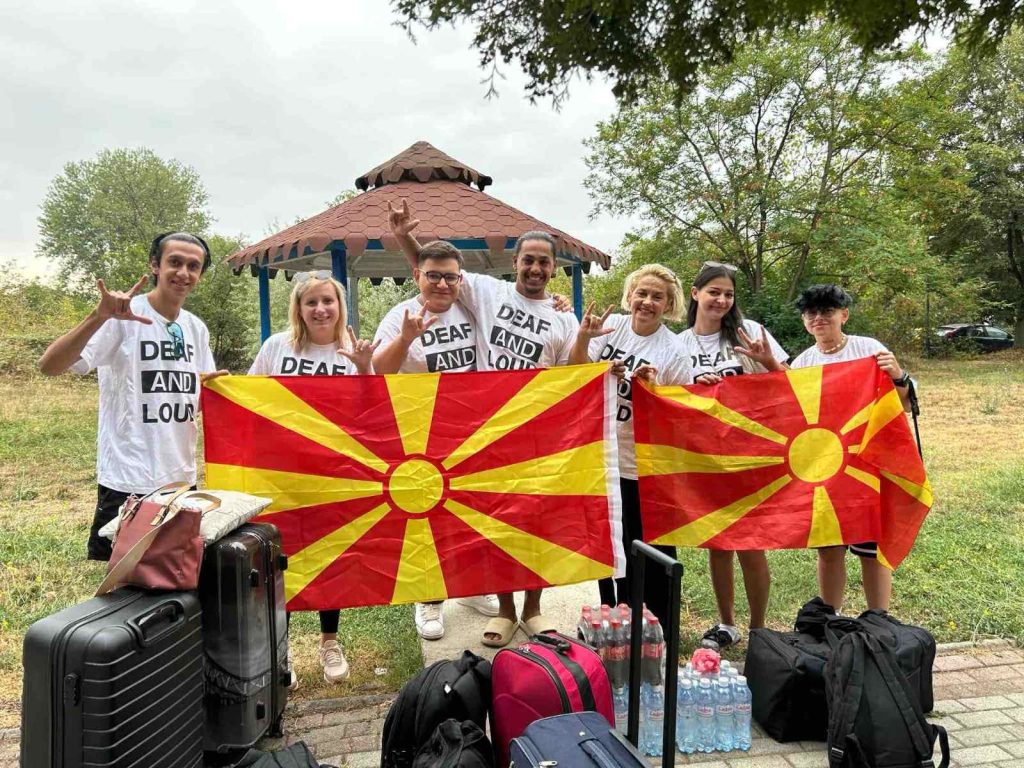
In the period from 08.09.-16.09. 2024, DUCOR “Partenija Zografski” took part in the Erasmus + Youth Exchange under the leadership of the Association of Parents of Children with Hearing Impairment ARDUS from Bulgaria. The youth team consisting of 6 young people (18-25 years old) students from DUCOR Partenija Zografski “and one educator and one sign language interpreter represented Macedonia within the framework of the youth exchange in which youth teams from 5 other countries also participated (Bulgaria, Georgia, Lithuania, Spain and Poland).
During the eight-day stay, various types of activities were implemented with an emphasis on exchanging experiences and gaining new experiences with various activities in order to achieve universal unity in overcoming the challenges that the organizer took care of.
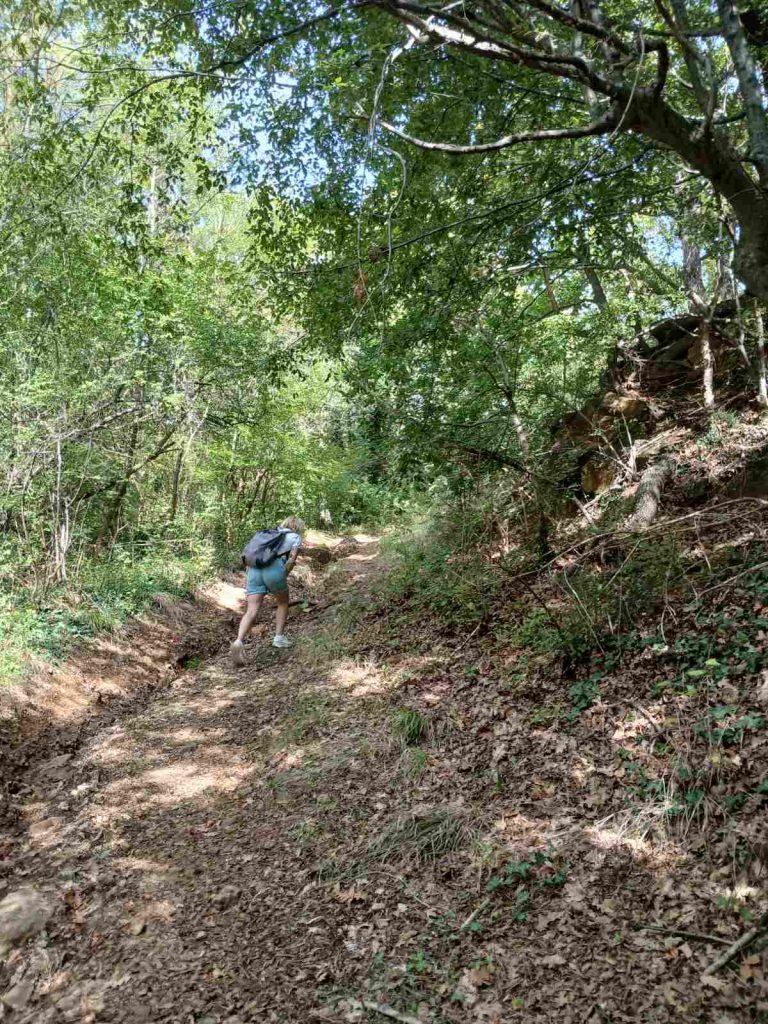
The activities took place in specific conditions on the very coast between the Black Sea and the Veleka River in a natural environment with stimulating physical activities for various actions: hiking, kayaking, swimming, running, climbing high steep pedestrian zones, crossing difficult paths, mountaineering, etc.
In addition to this type of activities, educational workshops were also conducted in order to familiarize the participants with safety measures and rules for staying in the field, a workshop for working with henna, education about the natural characteristic landscape and vegetation with a visit to museums, cultural acquaintance with the surrounding places and their visit (visit to the city of Ahtipol and Sozopol). But the most essential part of this youth exchange is the exchange and sharing of the cultural characteristics of all 6 countries that each team had as a task.






Tools and techniques for a better choice of profession
Within the framework of the Erasmus+ program, DUCOR “Partenija Zografski” received a grant for the implementation of a project entitled “Tools and techniques for a better choice of profession” with a duration of 15 months.
The goal of the project is to create new tools, i.e. new digital tests that will enable students to make an appropriate choice of their future profession according to their affinities and opportunities, including students with learning difficulties. It is also planned to develop didactic materials that will provide information through a game about the values that the student chooses, his interests and affinities towards a profession, and even hobbies. At the end, an appropriate manual for these tools will be developed, which will be available in the languages of the partner countries in the project, as well as in English.
The project began with a first meeting held in Riga, Latvia from 17.03 to 20.03.2024, where the activities and the dynamics with which they will be implemented were defined.
The project is supported by the EU through the National Agency for European Educational Programmes and Mobility, Key Action KA210 in the field of Vocational Education and Training.
Partners in the project are: “State Technical School” from Riga, Latvia, project coordinator, “Tartu” College from Tartu, Estonia and DUCOR “Partenija Zografski” Skopje.
Funded by the European Union. The views and opinions expressed are those of the author(s) and do not reflect the views of the European Union or the European Executive Agency for Education and Culture (EACEA). Neither the European Union nor the EACEA can be held responsible for them.


Erasmus+ project: Tools and techniques for better professional choices
DUCOR “Partenija Zografski” is a partner school in the Erasmus+ project in the key action KA210 in the field of vocational education and training. The project is entitled “Tools and techniques for a better choice of profession”. The aim of the project is to create new tools, i.e. new digital tests that will enable students to make an appropriate choice of their future profession according to their affinities and opportunities, including students with learning difficulties. It is also planned to develop didactic materials that will provide information through a game about the values that the student chooses, his interests and affinities towards a profession, and even hobbies. At the end, an appropriate manual for these tools will be developed, which will be available in the languages of the partner countries in the project, as well as in English.
The project began with a first meeting held in Riga, Latvia from 17.03 to 20.03.2024, where the activities and the dynamics with which they will be implemented were defined. Partners in the project are: “State Technical School” from Riga, Latvia, project coordinator, “Tartu” College from Tartu, Estonia and DUCOR “Partenija Zografski” Skopje.
Funded by the European Union. The views and opinions expressed are those of the author(s) and do not necessarily reflect the views of the European Union or the European Executive Agency for Education and Culture (EACEA). Neither the European Union nor the EACEA can be held responsible for them.


VET modules transformation to hybrid digital learning type and programming subject gamification for EU learners
Teachers and students from DUCOR “Partenija Zografski” participated in the Erasmus project for Learning through the Game Minecraft for a period of 2 years. The main idea of this project for learning programming through the game Minecraft is to enable and introduce tools that will allow children to learn how to code with the help of games. So our school enthusiasts started experimenting with this fantastic game and tried to include it in different school subjects to make a list and mix it with exercises from the game in different subjects.
The idea was expanded and in cooperation with several EU partner countries, we merged and shared good practices and knowledge. The project is very innovative because teachers who will apply our didactic material can create very innovative lessons, where students will learn professional subjects about programming while playing (coding), but at the same time following the unified program for programming basics.
For integration into the school curriculum, we used the implementation of the teacher kit through a teaching subject and monitoring the work of students through assignments and the use and exploitation of programming games / learning and understanding programming in a more interesting way through the game Minecraft.
Programming in the programming languages Python, Javascript and other professional subjects will be taught in the Minecraft Education environment (the main item for the development of this project), so that any educator from other subjects can get involved in gamification and easily collaborate with the programming staff to integrate their disciplines into coding.
Funded by the European Union. The views and opinions expressed are those of the author(s) and do not reflect the views of the European Union or the European Executive Agency for Education and Culture (EACEA). Neither the European Union nor the EACEA can be held responsible for them.



Slovenia
Name of project:
Professional and vocational growth
Partner school:
Institute for Deaf Ljubljana, R.Slovenia
Period of implementation:
2014-2016

Czech Republic
Name of project:
Building bridges
Partner school:
Higher School of Tourism and International Trade,
Prague, Czech Republic
Period of implementation:
2015-2016

Romania
Name of project:
Transfer of inovation
Partner school:
Scoala Gimnaziala Speciala pentru Deficienti de Auz “Sfanta Maria“, Bucuresti, Romania
Period of implementation:
2016-2017

Bulgaria
Name of project:
„New skills, new experiences“
Partner school:
„Professor Dr. Decho Denev “- Sofia, Bulgaria
Period of implementation:
2017-2018

Portugal
Name of project:
„ SMART EDUCATIONAL RESOURCES “
Partner school:
„ACJ Informatics “- Faro, Portugal
Period of implementation:
2017-2018
Bullying and cyberbullying in the world of silence and beyond - Be CyberWise!``, no. 2020-1-RO01-KA229-080106
The project is coordinated by the SPECIAL PROFESSIONAL SCHOOL FOR THE HEARING IMPAIRED “SAINT MARIA”, Bucharest, ROMANIA.
The project partners:
Agrupamento de Escolas Vale do Tamel,PORTUGALIA
DUCOR „Partenija Zografski“ MACEDONIA
Zakladna skola s materskou skolou, SLOVACIA
Zakladni skola Odry, Komenskeho 6, prispevkova organizace, CEHIA